


The Met Breuer, Floor 2
Closing January 2, 2018
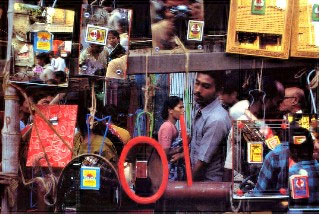
Raghubir Singh (Indian, 1942-1999). Pavement Mirror Shop, Howrah, West Bengal, 1991. Chromogenic print, 19 1/2 x 29 1/2 in. (49.5 x 74.9 cm). Collection of Cynthia Hazen Polsky. Photograph copyright © 2017 Succession Raghubir Singh
Raghubir Singh (1942–1999) was a pioneer of color street photography who worked and published prolifically from the late 1960s until his death in 1999 at age 56. Born into an aristocratic family in Rajasthan, he lived in Hong Kong, Paris, London, and New York—but his eye was perpetually drawn back to his native India. Modernism on the Ganges: Raghubir Singh Photographs situates Singh's photographic work at the intersection of Western modernism and traditional South Asian modes of picturing the world. The exhibition features 85 photographs by Singh in counterpoint with works by his contemporaries—friends, collaborators, fellow travelers—as well as examples of the Indian court painting styles that inspired him. The exhibition traces the full trajectory of Singh's career from his early work as a photojournalist in the late 1960s through his last unpublished projects of the late 1990s
The Met Fifth Avenue, Douglas Dillon Galleries, C. C. Wang Family Gallery, Frances Young Tang Gallery, Galleries 210-216
Closing January 6, 2018 *
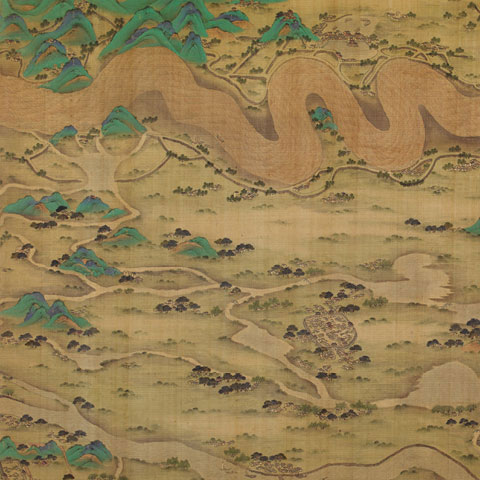
Ten Thousand Miles along the Yellow River (detail), datable to 1690-1722. Chinese, Qing dynasty (1644-1911). Two handscrolls; ink, color, and gold on silk, image: 30 11/16 x 505 7/8 in. (78 x 1285 cm). The Metropolitan Museum of Art, New York, Purchase, W. M. Keck Foundation Gift, The Dillon Fund Gift and gifts from various donors, in memory of Douglas Dillon, 2006
About a thousand years ago, the Chinese landscape painter Guo Xi posed the question, "In what does a gentleman's love of landscape consist?" This question is at the heart of the exhibition, which explores the many uses of landscape in the Chinese visual arts. This exhibition, which showcases more than 120 Chinese landscape paintings in three rotations, offers insights into the tradition and reveals distinctions between types of landscape that might not be obvious at first glance. What initially appears to be a simple mountain dwelling, for example, turns out to be the villa of the painter's friend, encoding a wish for his happy retirement. Similarly, what seems at first to be a simple study in dry brushwork turns out to be an homage to an old master, an expression of reverence for what has come before.
* The second rotation of this exhibition opens on January 19, 2018
The Met Fifth Avenue, Robert Lehman Collection, Gallery 964
Closing January 7, 2018
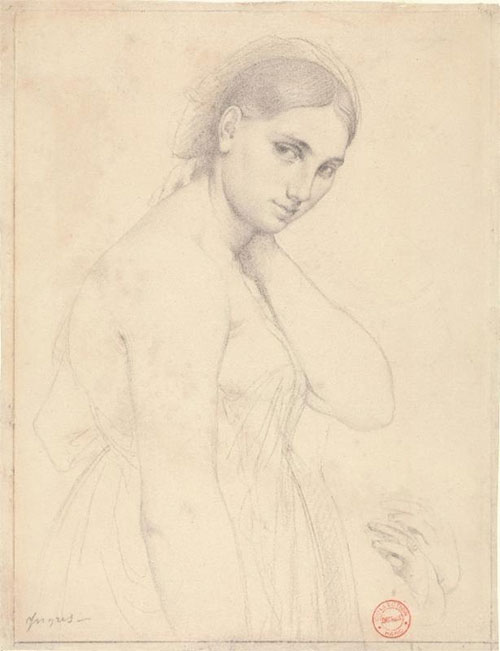
Jean Auguste Dominique Ingres (French, 1780-1867). Study for "Raphael and the Fornarina" (detail), ca. 1814. Graphite on white wove paper, 10 x 7 3/4 in. (25.4 x 19.7 cm). The Metropolitan Museum of Art, New York, Robert Lehman Collection, 1975 (1975.1.646)
The first presentation to highlight the full range of Robert Lehman's vast and distinguished drawings collection—numbering more than 700 sheets—and to explore his significant activity as a 20th-century collector, this exhibition features 60 masterpieces of European drawing spanning the Renaissance to the Modern age. Leonardo to Matisse: Masterpieces from the Robert Lehman Collection also traces the development of European drawing across five centuries through works by Leonardo da Vinci, Dürer, Rembrandt, Goya, Ingres, Seurat, and Matisse, and presents a dynamic array of styles, techniques, and genres. The selection also illustrates the different facets of the artists' creative processes—from Leonardo's keen anatomical observation in his Study of a Bear Walking, to Dürer's awakening artistic self-consciousness in his Self-Portrait study, to Rembrandt's re-interpretation of Leonardo's painted masterpiece, The Last Supper.
The Met Fifth Avenue, The Charles Z. Offin Gallery, Karen B. Cohen Gallery, Harriette and Noel Levine Gallery, Galleries 691-693
Closing January 7, 2018
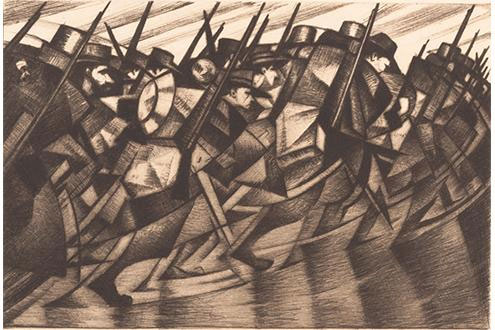
Christopher Richard Wynne Nevinson (British, 1889-1946). Returning to the Trenches (detail), 1916. Drypoint, plate: 6 x 8 1/16 in. (15.2 x 20.4 cm); sheet: 8 3/8 x 11 in. (21.3 x 28 cm). The Metropolitan Museum of Art, New York, Rogers Fund, 1968 (68.510.3)
Organized to commemorate the anniversary of World War I, this exhibition focuses on the impact of the war on the visual arts. Moving chronologically from its outbreak to the decade after the armistice, World War I and the Visual Arts highlights the diverse ways artists represented the horrors of modern warfare. The works on view reflect a variety of responses, ranging from nationalist enthusiasm to a more somber reflection on the carnage and mass devastation that resulted. The exhibition, drawn mainly from the collection of The Met and supplemented with select loans, includes prints, drawings, photographs, illustrated books, posters, periodicals, World War I trading cards from the Museum's celebrated Burdick Collection, and other documentary material.


© 2003-2024 THE TRETYAKOV GALLERY MAGAZINE
All rights reserved
The materials of this site can be used in other web-sites only if an active link www.tretyakovgallerymagazine.com is provided
E-mail: art4cb@gmail.com
The site was designed by Tatyana Uspenskaya

